
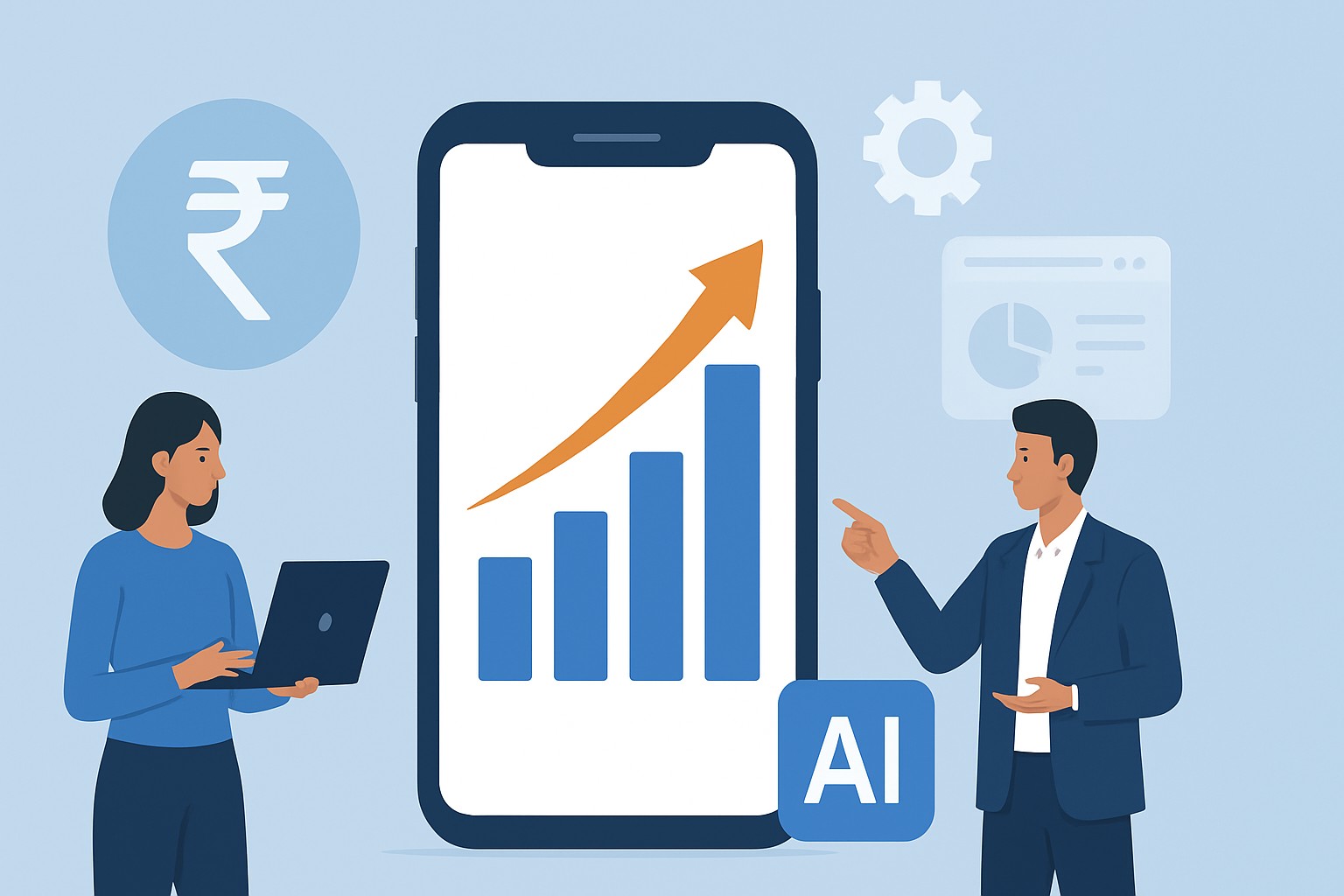
Smartphone Price Inflation in India: What It Means for Digital Businesses and How AI Can Help
Recent reports confirm a significant surge in smartphone prices in India, outpacing global markets. This inflationary pressure constrains consumer spending power, slows digital adoption, and challenges the growth trajectory of small and medium businesses (SMBs) relying on mobile engagement. For founders, operations leaders, and growth teams across India, understanding this trend and adapting digital strategies is crucial.
Why Smartphone Price Inflation in India Hits Harder
India’s smartphone market is unique — heavily skewed towards budget and mid-range devices with razor-thin margins. Supply chain disruptions, rising component costs, and increasing currency volatility have pushed prices upward multiple times in 2026. Unlike mature markets where premium devices dominate, Indian consumers face fewer affordable upgrade options, impacting mobile internet penetration and app usage.
For businesses, this translates into a smaller pool of digitally active users and more price-sensitive customers. In practical terms, every rupee spent on a smartphone now competes with other essentials, making it harder for brands to engage consumers through mobile-first digital channels.
The Digital Growth Dilemma for Indian SMBs
Indian SMBs have been racing to digitize their presence — launching websites, automating customer support, and leveraging online sales channels. However, rising smartphone costs threaten to slow these gains by limiting user engagement and reducing conversion rates.
Consider an SME running an ecommerce portal that depends largely on mobile traffic. With fewer affordable smartphones in circulation, the volume of mobile visits may stagnate or decline, putting pressure on customer acquisition costs and marketing ROI. Similarly, local service providers using chatbots and AI-powered forms to capture leads face a challenge when fewer customers interact through mobile devices.
How AI-Powered Tools Can Offset the Impact
Despite these headwinds, forward-thinking businesses can leverage AI-driven digital tools to sharpen efficiency, reduce operational costs, and improve engagement quality. Here’s how:
- AI Website Builders with Auto-Blogging: Automatically generating fresh, SEO-friendly content keeps your site relevant and discoverable without heavy manual effort. This attracts organic traffic beyond direct mobile app usage.
- AI Chatbots Trained on Your Documents: Provide personalized, 24/7 customer support that adapts to visitor queries instantly. This reduces dependency on call centres and improves lead conversion even with limited mobile interactions.
- CRM and ERP Automation: Streamline operations from lead capture to billing and inventory management. Automation cuts costs and accelerates customer response times, critical when consumer engagement windows shrink.
- No-Code Headless CMS: Quickly update your website or catalog without developer bottlenecks. Fast content refreshes help you respond to market shifts and customer preferences with agility.
Legacy Manual Workflows vs Agentic AI Workflows: A Practical Comparison
| Aspect | Legacy Manual Workflow | AI-Powered Agentic Workflow (LaysanX) |
|---|---|---|
| Content Creation | Manual blog writing, SEO research, and update cycles taking weeks. | Auto-blogging engine generates SEO-optimized articles daily, keeping site fresh. |
| Customer Interaction | Support via phone or email with limited hours and delayed responses. | AI chatbot, trained on company data, offers instant 24/7 support and lead capture. |
| Website Updates | Developer-dependent HTML/CSS edits, slow rollout of changes. | No-code headless CMS enables instant content changes by marketing teams. |
| Billing & Operations | Manual GST billing, invoicing, and inventory tracking prone to errors. | Automated GST billing and ERP modules reduce errors and accelerate cash flow. |
| Cost Efficiency | Multiple SaaS tools with redundant features and high subscription costs. | Unified LaysanX platform consolidates tools, reducing SaaS sprawl and expenses. |
Frequently Asked Questions
Why is smartphone price inflation a bigger issue for Indian SMBs?
India’s market is dominated by budget-conscious consumers and mid-tier devices. Price hikes reduce smartphone availability and affordability, limiting digital reach and forcing SMBs to rethink mobile engagement strategies.
How can AI website builders help maintain digital growth despite fewer mobile users?
AI website builders automate SEO-friendly content creation and site updates, increasing organic traffic from multiple channels beyond mobile apps, helping businesses reach customers cost-effectively.
What role does automation play in managing rising operational costs?
Automation reduces manual effort in billing, inventory, support, and CRM activities. For SMBs operating on thin margins, this lowers overhead, improves accuracy, and accelerates cash flow cycles.
Is investing in AI tools affordable for Indian SMBs?
Platforms like LaysanX offer plans starting at ₹199/month with no hidden commissions, making enterprise-grade AI automation accessible and risk-free for growing Indian businesses.
The LaysanX Action Plan
Smartphone price inflation is a reality Indian SMBs can’t ignore. Instead of retreating, embrace AI to sharpen your digital footprint and operational efficiency.
- Use LaysanX Web’s Auto-Blogging Engine to keep your website dynamic and SEO-optimized without adding manual workload.
- Deploy the Knowledgebase AI Chatbot to handle customer queries instantly and capture leads 24/7, even when mobile traffic fluctuates.
- Integrate Lead-to-Ledger ERP Automation for seamless billing, inventory, and CRM workflows that reduce errors and save time.
Deploy your workspace instantly for just ₹199/Month. 0% platform sales commission splits. Retain 100% of your operational business margins risk-free with our 7-Day Refund Guarantee.
Stay ahead of inflation pressures with smarter technology — your digital resilience starts here.