
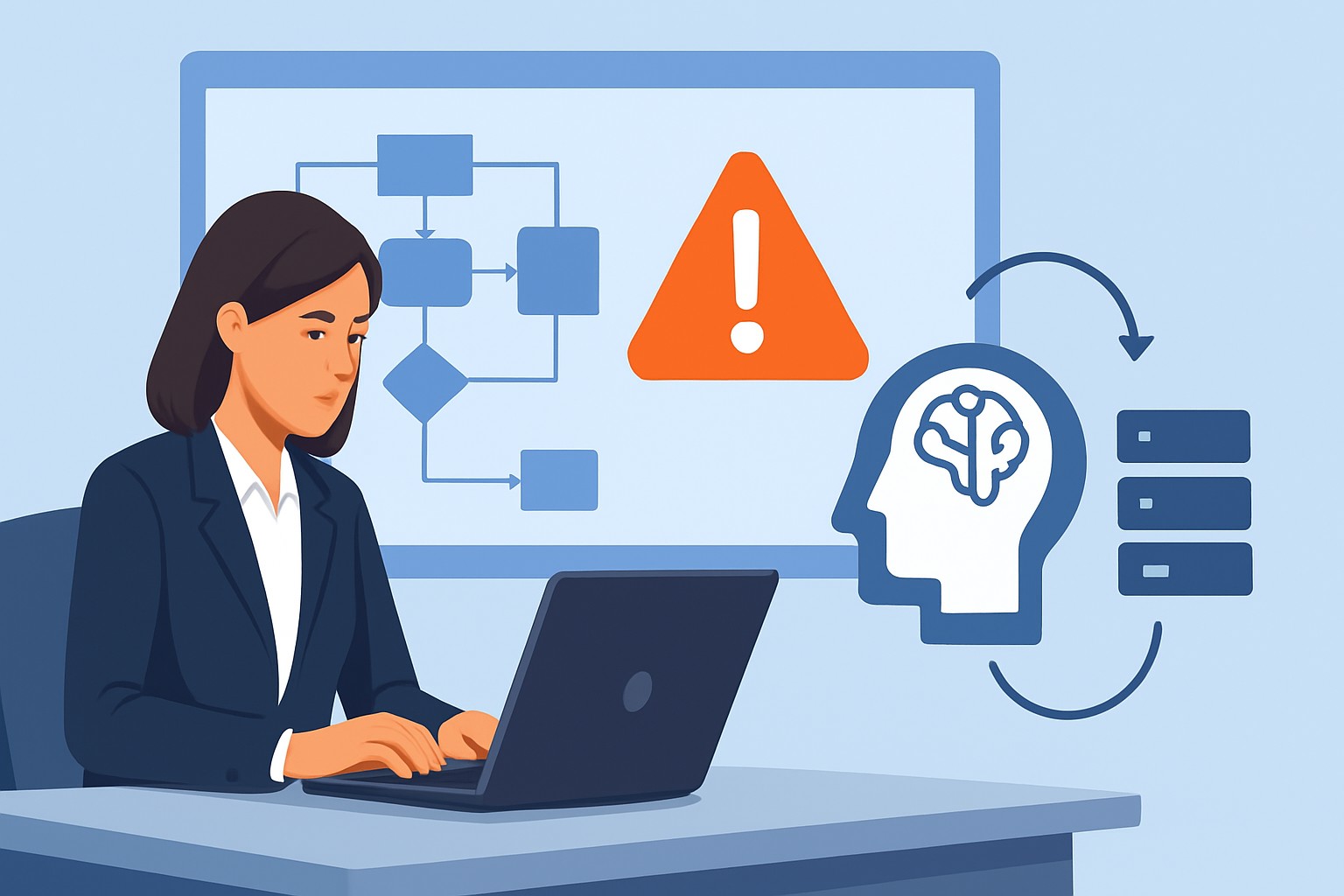
Building Failover Plans for AI Agent-Dependent Operations: A Practical Guide for Indian SMBs
Artificial intelligence is no longer a futuristic concept but a backbone for modern business operations across industries. From AI-powered website builders to intelligent chatbots and automated CMS workflows, Indian small and medium businesses (SMBs) are embracing AI to boost efficiency and scale faster. But what happens when these AI agents, which many businesses now depend on, encounter failures or outages?
Traditional business continuity plans were designed for manual or human-driven processes and seldom account for AI system disruptions. This gap can leave SMBs vulnerable to operational downtime, lost leads, and frustrated customers. It’s time to rethink how failover strategies should evolve in an AI-dependent landscape.
Why Failover Planning for AI Matters More Than Ever
Consider a local e-commerce retailer in Bengaluru relying on an AI chatbot trained on product catalogs and customer FAQs to handle queries 24/7. If the chatbot service crashes or delivers inaccurate responses, customer trust erodes instantly. Similarly, automated blog generation tools that feed fresh SEO content to a company’s website must not stall, or search rankings and traffic suffer.
Indian SMBs often operate with lean teams and limited IT resources, meaning downtime or poor customer experience can have outsized impacts compared to large enterprises. Proactive failover planning ensures these AI-driven workflows stay robust and resilient.
Key Challenges in AI Failover for SMBs
- Opaque AI Dependencies: Many SMBs use multiple third-party AI services without full visibility into their uptime or failure modes.
- Manual Backup Gaps: Without automated fallback processes, teams scramble to patch broken workflows manually.
- Training Data Risks: AI chatbots or content engines trained on proprietary documents or local language data risk failing if data pipelines break.
- Cost Constraints: Redundant AI infrastructure or failover tools may seem expensive for SMB budgets.
Legacy vs Agentic AI Workflow Failover: A Comparison
| Aspect | Legacy Manual Workflow | Agentic AI Workflow with Failover |
|---|---|---|
| Dependency | Human operators with manual task handoffs | AI agents handling content, chat, and business automation |
| Failure Detection | Delayed, based on human observation or customer complaints | Automated monitoring with real-time alerts and fallback triggers |
| Failover Trigger | Manual intervention needed to switch processes | Seamless switch to backup AI models or default manual modes |
| Data Integrity | Risk of lost or inconsistent records during outages | Automated data syncing and audit trails to prevent loss |
| Cost | Lower upfront, but higher risk of costly downtime | Moderate investment with reduced operational risk and improved uptime |
Practical Steps to Build AI Failover Plans
1. Map Your AI Dependencies Clearly
Start by listing all AI agents integrated into your business operations—website builders, chatbots, content automation tools, billing engines. Understand their roles, data inputs, and criticality.
2. Implement Automated Monitoring and Alerts
Use tools that can track AI service health and performance in real-time. Early detection of anomalies lets you act before customers notice.
3. Design Redundant Backup Workflows
For critical AI functions like chatbots, prepare simpler fallback scripts or manual response teams that can be activated quickly. For content automation, maintain a library of evergreen articles to serve if fresh generation halts.
4. Regularly Test Failover Scenarios
Simulate AI outages to validate your backup processes. Testing builds confidence and uncovers hidden gaps.
5. Invest in Unified Platforms with Built-in Failover
Platforms like LaysanX provide integrated AI website building, chatbot, and business automation under one roof, reducing third-party fragmentation. Their ecosystem supports seamless failover and data consistency, especially vital for Indian SMBs juggling GST billing, inventory, and customer support.
Use Case: An Indian SME’s Failover Journey
Take an Ahmedabad-based retailer using LaysanX’s AI website builder and chatbot. When their chatbot faced a temporary data sync issue, the system automatically routed queries to a human agent and displayed a friendly message to customers. Meanwhile, their blog automation switched to pre-approved content, maintaining SEO momentum. This resilience avoided lost sales and manual firefighting, all managed with a ₹199/month subscription.
FAQs on AI Agent Failover Planning for SMBs
- What is an AI agent in business operations?
- An AI agent is software that performs automated tasks such as website content generation, customer chat support, or business process automation without human intervention.
- Why do SMBs need failover plans for AI workflows?
- Because AI systems can fail or underperform due to technical glitches or data issues, failover plans ensure business continuity and minimize downtime impact.
- Is failover planning expensive for SMBs?
- Not necessarily. Integrated platforms offering unified AI solutions reduce complexity and costs while embedding failover capabilities.
- How often should failover plans be tested?
- At least quarterly, or whenever significant changes occur in AI integrations or business processes.
- Can AI failover plans improve customer trust?
- Yes. Consistent, reliable customer experiences even during AI disruptions build long-term trust and loyalty.
The LaysanX Action Plan
Ensure your AI-driven operations never miss a beat. With LaysanX, deploy your workspace instantly for just ₹199/Month. Experience 0% platform sales commission splits and retain 100% of your operational business margins risk-free with our 7-Day Refund Guarantee.
Leverage LaysanX’s AI Website Builder, Knowledgebase Chatbot, and Lead-to-Ledger ERP automation—built to handle AI failover seamlessly. Start automating smarter and safer today.